There is a cleaning method that leaves no water, no chemicals, no abrasive residue, and no secondary waste. It works on live electrical equipment. It can be done without shutting down a production line. It cleans a diesel engine block the same way it cleans delicate pharmaceutical manufacturing tooling. And it does all of this without damaging the surface underneath.
That is not a pitch. That is just how dry ice blasting works, and it explains why industries across Western Australia are moving toward it at a rate that shows no signs of slowing.
What Dry Ice Blasting Actually Does
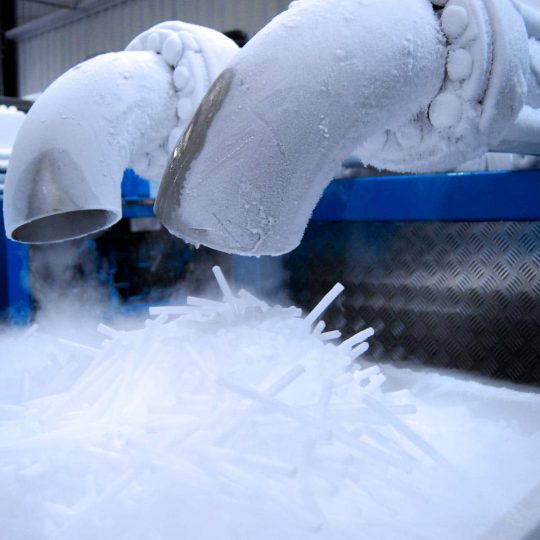
The process is straightforward in principle. High-density 3mm dry ice pellets are accelerated through a pressurised air stream and directed at the surface being cleaned. On contact, three things happen simultaneously. The kinetic energy of the pellet dislodges the surface contaminant. The rapid temperature drop causes thermal shock, which causes the contaminant to contract and break away from the substrate. And then the pellet itself sublimates, converting instantly from solid to CO2 gas and disappearing entirely.
What remains is a clean, dry surface. No water. No solvent residue. No grit or sand. Just the contaminant, which can be swept or vacuumed away on its own.
That combination of kinetic impact, thermal shock, and zero-residue sublimation is what makes dry ice blasting genuinely different from every other cleaning method. Sandblasting is abrasive. Pressure washing leaves moisture. Chemical cleaning introduces solvents that often become a secondary waste problem. Dry ice blasting does none of those things.
The Downtime Argument Is the One That Wins People Over
Ask a maintenance manager what their biggest pain point is and you will almost always hear the same answer: downtime. Every hour a piece of equipment is offline for cleaning is an hour it is not producing, not processing, not generating return.
Traditional cleaning methods require equipment to be shut down, often cooled, disassembled, moved to a dedicated cleaning area, cleaned, dried, reassembled, and returned to service. That process can take hours or days depending on the complexity of the machinery involved.
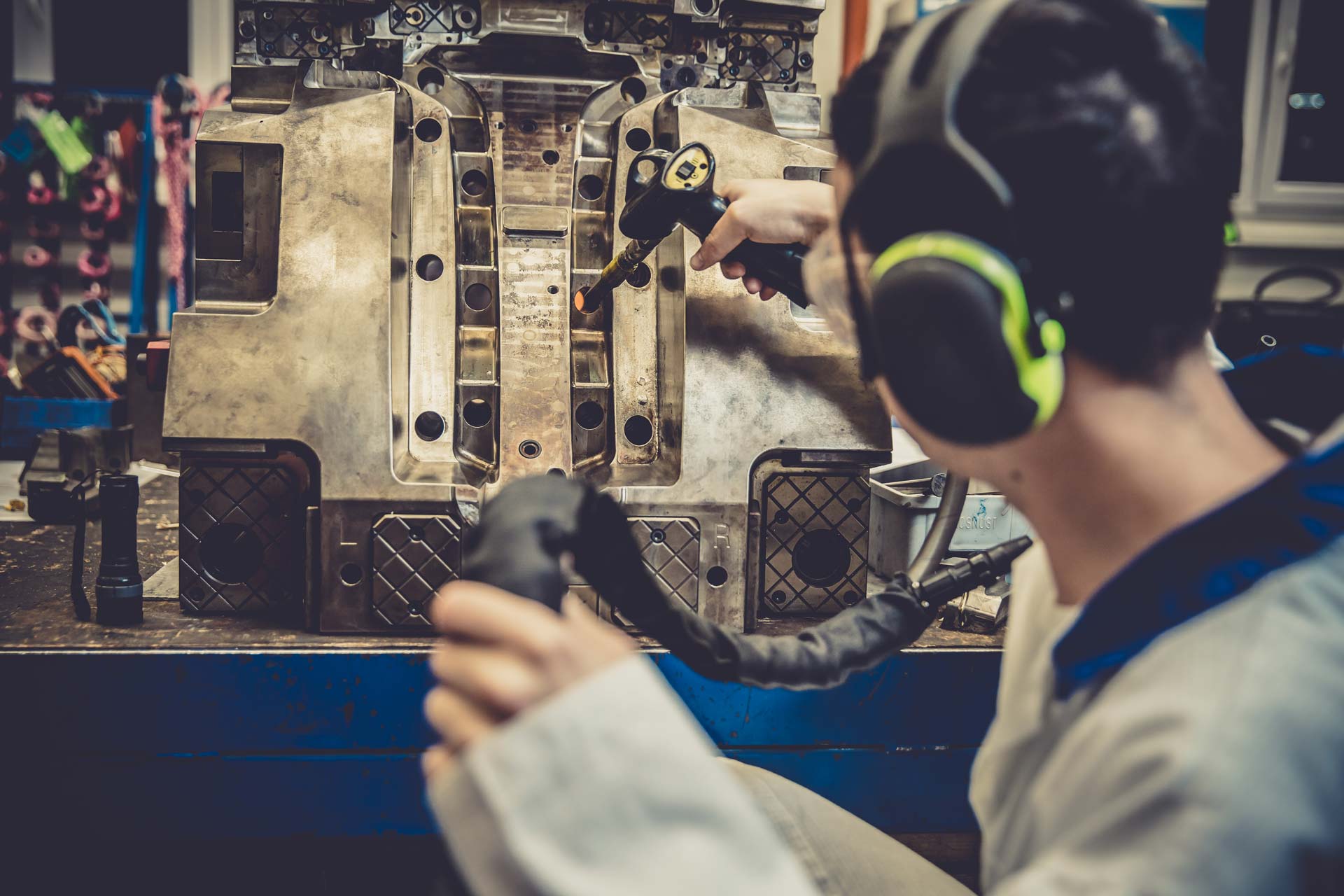
Dry ice blasting can be performed in situ. On hot equipment. Without disassembly. In most situations, machinery does not need to stop at all. The process is completely dry and non-conductive, which means it is safe to use directly on electrical motors, pneumatic components, hydraulic systems, and wiring, the kinds of components that rule out water-based cleaning entirely.
For any operation running on tight production schedules, that difference is significant. Cleaning that once took a full day of downtime can often be completed in hours, with the equipment ready to return to service immediately.
Why WA’s Mining Sector Has Taken to It
Western Australia’s mining industry deals with some of the most demanding cleaning challenges anywhere. Conveyors, crushers, drilling equipment, turbine and generator components, hydraulic packs, heat exchangers, filters and pumps: all of them accumulate heavy contamination from red dust, grease, bitumen, oil, and weld slag in environments that are often remote, always demanding, and never tolerant of extended downtime.
Mining applications for dry ice extend well beyond blasting too. Dry ice is used to shrink bearings and metal components for precision fitting, contracting metal through rapid cooling so components slide into housings without the need for force, lubricants, or the risk of damage that comes from hammering parts into place. As the component warms back to ambient temperature, it expands to a tight, secure fit. It is also used to aid rock fragmentation by inducing thermal shock in formations prior to blasting, and to manage temperature and dust during ore processing.
For an industry where equipment failure or unplanned downtime can cost tens of thousands of dollars per hour, a cleaning and maintenance method that protects equipment integrity, reduces the need for disassembly, and leaves no secondary waste is not just convenient. It is a meaningful operational advantage.
Industrial Operations: The Chemical-Free Case
Across manufacturing, aviation, automotive, power generation, printing, and general industrial maintenance, the shift toward dry ice blasting often comes down to one thing: the elimination of chemicals.
Traditional solvent-based cleaning creates two waste streams. The primary contaminant that needed to be removed, and the solvent that was used to remove it, which is now contaminated and must be disposed of as hazardous waste. The cost of chemical procurement, handling, storage, and disposal adds up quickly. So do the regulatory obligations around hazardous materials in a workplace.
Dry ice eliminates all of that. There are no hazardous fumes, no chemical storage requirements, no secondary contaminated waste. The CO2 used is non-toxic, non-hazardous, and simply returns to the atmosphere. The only waste generated is the contaminant itself.
For industrial operators dealing with grease, weld slag, sealant, paint, mould release agents, or any of the other contaminants that accumulate on machinery over time, that simplification of the cleaning process has real value. It also reduces risk for workers, who no longer need to handle or breathe chemical solvents during cleaning operations.
Pharmaceutical and Medical: Where Cleanliness Is Non-Negotiable
Perhaps no sector has stricter cleaning requirements than pharmaceutical manufacturing and medical device production. Residual solvents, moisture, and contamination are not inconveniences in these environments. They are failures of compliance that can compromise product integrity, patient safety, and GMP certification.
Dry ice blasting is increasingly specified in these settings precisely because it introduces nothing to the surface being cleaned. No moisture that could cause microbial growth. No chemical residue that could contaminate a batch. No abrasion that could alter the dimensions of precision tooling or manufacturing equipment.
Medical and pharmaceutical applications for dry ice extend across the supply chain too, from the cleaning of manufacturing equipment and moulds to the cold chain transport of vaccines, biologics, clinical trial samples, and temperature-sensitive medications. Dry ice at -78.5°C is capable of maintaining the ultra-low temperatures required for mRNA vaccines and other formulations that would degrade at even slightly higher temperatures. In regional and remote WA, where cold chain logistics are genuinely challenging, that reliability matters enormously.
The Environmental Dimension
WA industries are under increasing pressure, both regulatory and reputational, to reduce chemical use, minimise waste, and demonstrate environmental responsibility. Dry ice blasting addresses all three simultaneously.
It uses no water, which matters in a state where water conservation is a serious concern. It generates no chemical waste stream. The CO2 used in the process is captured as a byproduct of other industrial processes rather than being produced specifically for cleaning purposes, which means it is not adding net carbon to the atmosphere. And because cleaning can be done in situ without transporting equipment to dedicated wash bays, it also reduces the fuel and logistics costs associated with maintenance.
For businesses preparing for environmental audits or working toward sustainability targets, dry ice blasting is a straightforward way to reduce their cleaning footprint without sacrificing results.
The Range of Industries Already Using It in WA
The versatility of dry ice blasting is part of what drives adoption. This is not a niche method suited to one type of facility. It is already in regular use across:
Mining and resources operations for equipment cleaning, bearing shrinking, and ore processing support. Manufacturing and industrial facilities for mould cleaning, de-flashing, and machinery maintenance. Aviation and automotive operations for engine bays, components, and assembly line equipment. Food and beverage processing, where chemical-free cleaning in production environments is both preferred and often required. Printing and packaging, where ink and adhesive buildup on machinery is a persistent problem. Fire remediation, graffiti removal, and historical restoration, where non-abrasive cleaning is essential to preserve the underlying surface. Pharmaceutical and medical device manufacturing, where contamination of any kind is unacceptable.
In each of these sectors, the reasons for switching are slightly different, but the underlying logic is the same: dry ice blasting achieves better cleaning results with fewer trade-offs than the alternatives.
Getting Started with Dry Ice Blasting in WA
The dry ice itself is only one part of the equation. The blasting equipment and the operator expertise are what convert quality dry ice into quality results. Specialists with the right equipment and training can introduce dry ice blasting into almost any maintenance or cleaning programme.
If you are evaluating dry ice blasting for your operation, the starting point is understanding your specific contaminants, surfaces, and operational constraints. From there, a blasting specialist can assess the right approach and equipment configuration. The dry ice supply side, high-density 3mm pellets produced to food-grade standards and delivered in insulated containers to maintain freshness and density right up to the point of use, is the part that keeps the whole process running reliably.
The industries switching to dry ice blasting in WA are not doing so because it is new or novel. They are doing so because, once they see what it can and cannot do compared to what they have been using, the case for it becomes difficult to argue against.