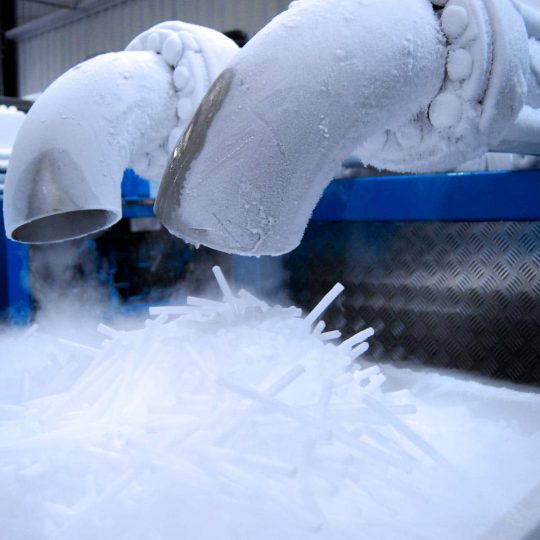
Dry ice will sublimate into Carbon Dioxide (CO2) gas and needs to be stored and transported correctly.

DRY ICE Storage

It’s best to store dry ice in a well-insulated dry ice box or container – the better the insulation, the slower the dry ice sublimation will occur.

Do not store dry ice in a refrigerator or a freezer (unless the dry ice is being used to maintain the proper holding temperature).

Do not store dry ice in an airtight container; never store in a glass container. The sublimation of dry ice into Carbon Dioxide gas will cause an airtight container to expand, rupture or burst.

Always store dry ice in a well-ventilated area. Avoid storing dry ice in unventilated rooms, cellars, autos or boat holds. The sublimated Carbon Dioxide gas will sink to low areas and replace oxygenated air. Carbon Dioxide gas at elevated concentrations may be fatal when inhaled. Some surfaces left in direct contact with dry ice may be damaged by the extreme cold. Adhesives may become brittle and break down.

DRY ICE Transport

Dry ice will sublimate so it is best to collect as close as possible to the time it is needed.

Small quantities can be transported in well insulated containers, eskys or foam boxes and for larger quantities we recommend using our Low Loss Containers.

Low Loss Containers

We strongly recommend storing and transporting large quantities dry ice in high-quality Low Loss Containers, specifically designed to reduce the sublimation of the dry ice.

We invest significantly in these specialised containers for the benefit of our customers

These highly insulated and tightly sealed containers reduce sublimation and keep dry ice in optimum condition during transportation and storage.

Low Loss Containers are available in various sizes, with or without wheels, with the capacity to hold up to 200kg, 250kg and 350kg of dry ice.

Polystyrene Dry Ice Boxes (Foam Boxes)

Foam eskys are available for purchase for small quantities of dry ice up to 25kg.

PiCKUps

Orders will be ready for collection in Foam Eskys. Alternatively bring your own well insulated esky for filling while you wait.

If dry ice is transported inside a car or van, make sure the vehicle is well ventilated at all times.

WARNING: Dry ice may be hazardous if incorrectly handled. Make sure you understand the dry ice Handling Instructions. Safety is our priority.

Delivery

Yes we deliver! Take advantage of our convenient delivery service Monday to Friday anywhere across the Perth Metro area.

For deliveries across WA, we collaborate with trusted logistical partners to ensure prompt and reliable service

Dry Ice orders between 10kg and 100kg, are typically delivered in Polystyrene Eskies.

Bulk orders over 100kg are delivered in our Low Loss Containers which are available for hire. Our specially insulated Low Loss, Dry Ice Containers ensure the dry ice is kept in its optimum condition and reduce sublimation during transportation and storage.

We will collect the empty container when you are ready.

Choosing the Right Storage Container

To maximise the lifespan of dry ice during storage and transport, it’s important to use high-quality insulated containers designed to minimise sublimation. Thick foam boxes, polystyrene eskies, and specially insulated low-loss containers help maintain colder internal temperatures for longer periods while reducing dry ice loss. Containers should never be completely airtight, as dry ice naturally releases carbon dioxide gas as it sublimates. Proper ventilation allows gas to escape safely while maintaining cooling performance.

Key Storage Guidelines

For best results, store dry ice in a cool, shaded, and well-ventilated area away from direct sunlight or heat sources. Keeping containers closed as much as possible also helps reduce unnecessary temperature exposure and slows sublimation. When transporting dry ice, insulated containers should be secured to minimise movement and maintain consistent cooling conditions during transit.

Always handle dry ice carefully using insulated gloves or protective equipment, and avoid storing it in sealed rooms, vehicle cabins, or confined spaces where carbon dioxide gas may accumulate. Proper storage practices not only improve dry ice efficiency but also help ensure safe handling during pickup, delivery, and onsite use.

Frequently Asked Questions

Yes, dry ice is classified as dangerous goods (UN1845), falling under Class 9 miscellaneous hazards. We have DG placards available for purchase if required for shipping purposes.

Yes, you can take dry ice on flights, but it is strictly regulated as dangerous goods. Generally, you are allowed up to 2.5kg per person for packing perishables in both checked and carry-on luggage. The container must be ventilated to allow carbon dioxide gas to escape, and our foam eskies are ideal for this purpose.

Transport dry ice in a well-ventilated space such as a truck bed or open hatch area. Avoid sealed cabins, as sublimated CO₂ gas can build up and reduce oxygen levels if ventilation is poor.